
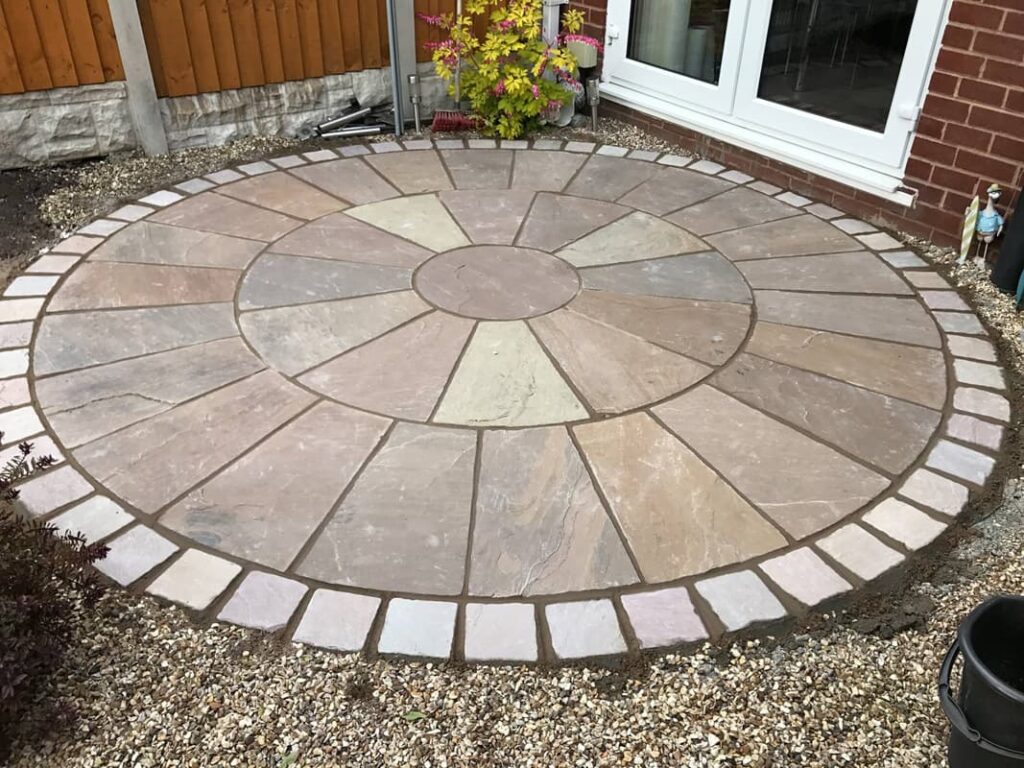
An excellent approach to garden design is using the golden ratio to inform your plans, a way to portion out the space using classic geometry, with the end result being something balanced, harmonious and pleasing to the eye.
What is the golden ratio?
The golden ratio is a mathematical proportion equal to approximately 1.618.
Practically speaking, this means that two specific quantities are considered to be in the golden ratio if the ratio of the combined length to the larger quantity is equal to the ratio of the larger quantity to the smaller quantity.
You can see evidence of the golden ratio absolutely everywhere… and once you start, you won’t be able to stop!
It’s particularly good for garden design because it’s a naturally occurring phenomenon, observable in the likes of pine cone arrangements, sunflower seed patterns, shell chambers, flower petals and so on.
Architects also use the golden ratio for buildings, creating visual balance, harmony and proportion. Take a look at the Taj Mahal and its central domes, arches and minarets, or the Great Pyramid of Giza for some great examples of how it’s been used.
But back to the matter at hand…
How do you use the golden ratio for garden design and landscaping?
- Design your hardscaping features like patios, driveways, raised beds and lawns so that the long side is 1.618 times the length of the short side
- Divide any long or narrow spaces into two distinct zones, proportionate to the golden ratio
- Lay out your walkways and any seating zones using golden divisions so that you can move around comfortably, while ensuring enough space for planting and greenery
- Offset focal points such as sculptures and water features along golden intersections to draw the eye naturally around the garden, rather than placing them dead in the middle of the space